Plan your trip
Plan your aurora trip
Seeing the northern lights is really three decisions: pick a base under the auroral oval, give yourself enough dark nights, and book the pieces that put you under a clear sky. Here are the itineraries chasers actually run — with the tours, stays and kit to make each one happen.
Paid linksWe earn a commission if you book or buy through these — at no extra cost to you.
Step one
Choose your aurora destination
Six proven bases, each striking a different balance between aurora odds, weather, cost and what there is to do when the sky clouds over. Pick what matters most and we will point at the one that answers it.
Solar maximum — the strongest aurora years in a decade, through 2026–27
Showing all six bases.
Norway
Tromsø
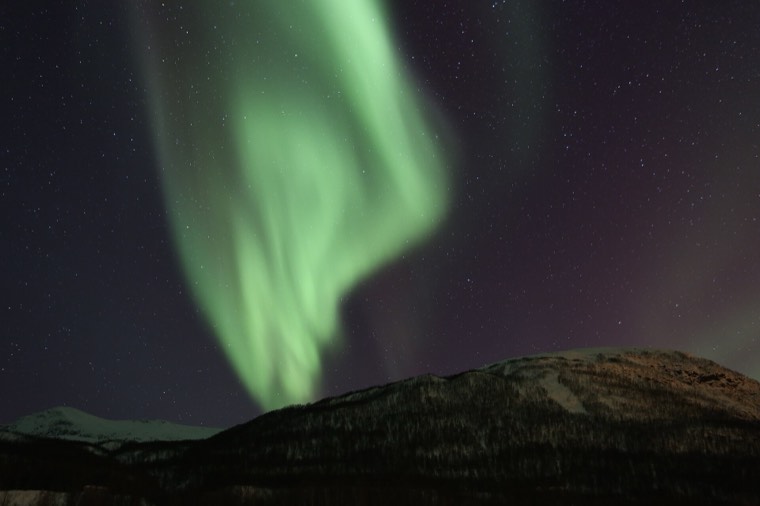
Tromsø sits squarely under the oval, so it lights up on modest activity — the reason it's the default first aurora trip.
- Best months
- Sep – Mar
- Nights
- 4 nights
- Aurora odds
- High activity, coastal cloud
- Under the oval — frequent displays even at low Kp
- Nightly minibus & boat chases that outrun the cloud
More about this trip
Who it's for First-timers who want the safest bet
Tromsø sits squarely under the oval, so it lights up on modest activity — the reason it's the default first aurora trip.
Fly into a walkable Arctic city, then join a guided minibus or boat chase each night: the guides watch the cloud maps and drive you to whichever fjord or valley is clear, which is the whole game this far north.
Four nights gives you three or four real attempts and a spare for weather. Days fill themselves — the cable car up Storsteinen, a fjord cruise, dog-sledding, or a run to the Lyngen Alps.
Base yourself in the centre and let the operators handle the logistics; you're paying for their read on the sky, and it's the single biggest lever on your odds.
Sweden
Abisko
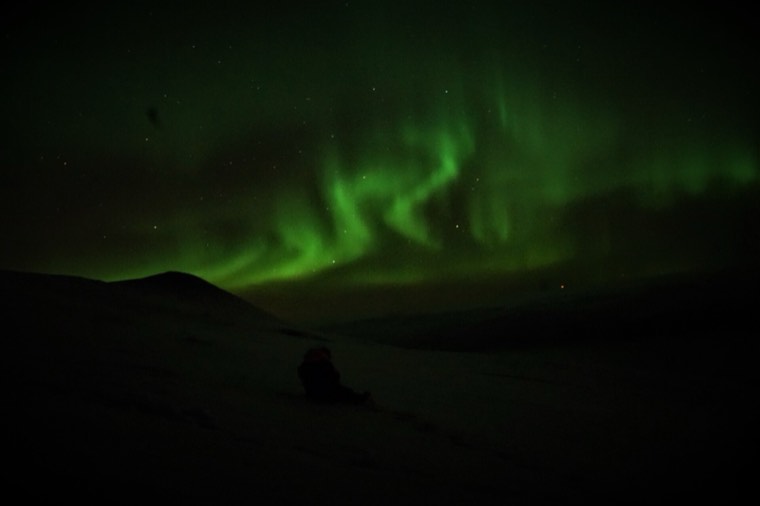
If cloud is the enemy, Abisko is the answer.
- Best months
- Dec – Mar
- Nights
- 3–4 nights
- Aurora odds
- Best clear-sky odds
- Rain-shadow "blue hole" = unusually clear nights
- Aurora Sky Station chairlift above the treeline
More about this trip
Who it's for Chasers who prioritise clear skies over nightlife
If cloud is the enemy, Abisko is the answer. The mountains around Torneträsk create a rain shadow — the famous "blue hole" — that leaves this pocket of Swedish Lapland clear when everywhere around it is socked in. That statistical edge is why serious chasers build a trip around it.
Ride the chairlift to the Aurora Sky Station above the treeline for an unobstructed dome, or simply walk out from the village onto the frozen lake. Reach it by the scenic rail from Kiruna or Narvik, and give it three to four nights to let the microclimate pay off.
Pair it with a night or two in Kiruna's icehotel country and you have a compact, high-odds Lapland week with almost no wasted cloud.
Iceland
Reykjavík
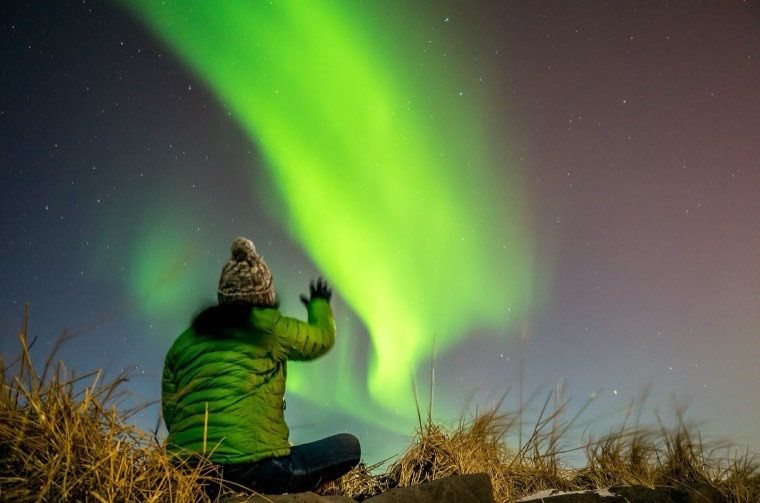
Iceland is the trip where the aurora shares top billing with the landscape.
- Best months
- Sep – Apr
- Nights
- 7 nights
- Aurora odds
- Fickle maritime weather
- Pair the lights with the Golden Circle & Blue Lagoon
- Self-drive to whichever coast is forecast clear
More about this trip
Who it's for Road-trippers who want scenery + aurora
Iceland is the trip where the aurora shares top billing with the landscape. Base in Reykjavík, then either self-drive out of the city glow each night or take a guided "cloud-chasing" tour that repositions to find the gaps.
Give it a week and you can loop part of the ring road — Golden Circle, the south-coast waterfalls and black-sand beaches, the glacier lagoon — with the lights as the nightly encore whenever the sky clears.
A rental car is the multiplier here: it lets you drive to whichever coast is forecast clear instead of hoping Reykjavík cooperates. Iceland's maritime weather is fickle, so treat every clear night as the one and keep the schedule loose enough to chase it.
Finland
Rovaniemi
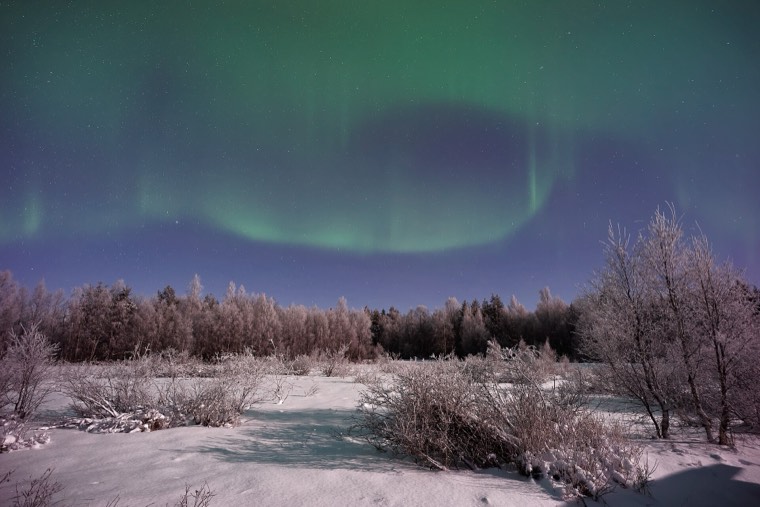
This is the aurora trip you watch from bed.
- Best months
- Sep – Mar
- Nights
- 3–4 nights
- Aurora odds
- Reliable, inland Lapland
- Heated glass igloos — watch the lights from bed
- Husky, reindeer & snowmobile safaris
More about this trip
Who it's for Couples & families who want comfort
This is the aurora trip you watch from bed. Rovaniemi — the gateway to Finnish Lapland, and easily paired with nearby Levi — is the home of the glass-roofed igloo, where a heated, glass-domed room lets you wait out the sky in comfort and wake to the lights overhead.
It's the format that converts a cold, patient hobby into a genuine holiday, which is why it's the top pick for couples and families. Around the igloos you get the full Lapland programme: husky and reindeer safaris, snowmobiling, and Santa's village at the Arctic Circle for anyone travelling with kids.
Book three to four nights so a cloudy stretch doesn't wipe out the trip, and reserve the glass igloo early — the good ones sell out a season ahead.
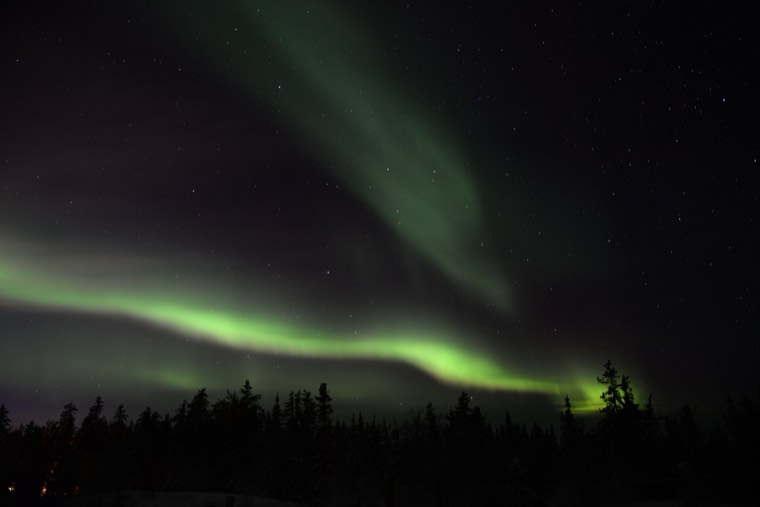
Canada
Yellowknife
Yellowknife sits under the oval with famously flat, dry, cloud-free skies — a combination that gives it some of the highest documented aurora-success rates anywhere, and the reason operators quote three-night odds so confidently.
- Best months
- Nov – Apr
- Nights
- 3–4 nights
- Aurora odds
- Highest success rate
- Flat, dry skies — among the highest success rates
- Heated aurora-village teepees away from town glow
More about this trip
Who it's for Odds-maximisers who'll travel far for it
Yellowknife sits under the oval with famously flat, dry, cloud-free skies — a combination that gives it some of the highest documented aurora-success rates anywhere, and the reason operators quote three-night odds so confidently.
The signature experience is a heated "aurora village" teepee outside the city lights: you stay warm, step out when the lights fire, and repeat across the long Northwest Territories night.
Because the odds compound with each clear night, three nights is the accepted minimum and four is safer. It's remote and it's cold, so lean on a package that handles the transfer out to dark-sky camps and the warm base to wait in.
Come for the near-guaranteed lights; the flat sub-Arctic emptiness is the backdrop.
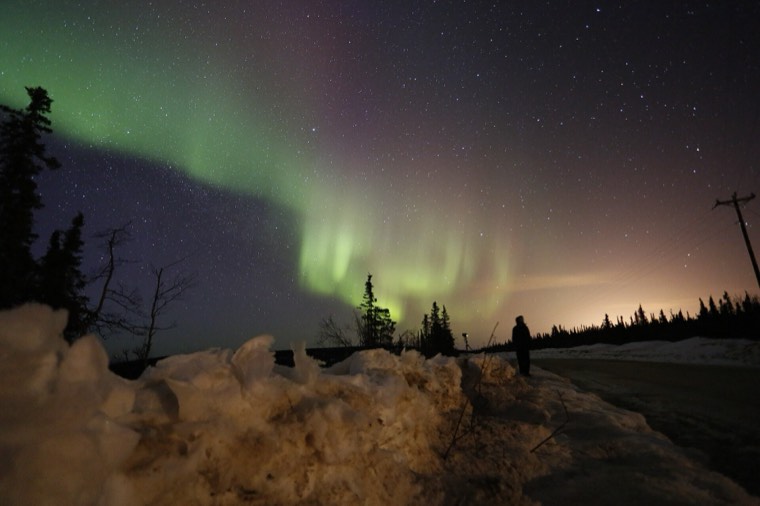
USA (Alaska)
Fairbanks
Fairbanks pairs a genuinely reliable aurora base with a proper Alaskan adventure.
- Best months
- Aug – Apr
- Nights
- 3–4 nights
- Aurora odds
- Long, dry clear season
- Inland & dry — a long, clear-sky season
- Chena Hot Springs aurora viewing
More about this trip
Who it's for Travellers who want aurora + a US wilderness trip
Fairbanks pairs a genuinely reliable aurora base with a proper Alaskan adventure. Sitting inland under the oval — away from the coastal cloud that plagues Anchorage — it enjoys a long, dry, clear season, and many lodges run an "aurora wake-up" so you can sleep until the lights actually appear.
Soak in the Chena Hot Springs while curtains ripple overhead, add dog-sledding or a run north toward the Arctic Circle, and you've got days as memorable as the nights.
Give it three to four nights for the odds to work in your favour. For North American travellers it's the shortest hop to world-class aurora; for everyone else it's the one that comes bundled with Alaska.
Choose a base
Which base is right for you?
All six sit under the northern oval, so none needs a big storm — the differences are about weather reliability, how remote they are, and how you'd rather spend the days. Kp figures are the rough threshold at which the lights become likely overhead.
| Base | Reliability | Best season | Kp needed overhead | Getting there | Tours | Book |
|---|---|---|---|---|---|---|
| Tromsø | High activity, coastal cloud | Sep – Mar | Kp 2+ (under the oval) | Direct flights; walkable city | Tours → | Find stays |
| Abisko | Best clear-sky odds | Dec – Mar | Kp 2+ (under the oval) | Scenic rail from Kiruna/Narvik | Tours → | Find stays |
| Reykjavík | Fickle maritime weather | Sep – Apr | Kp 3+ (drive to clear coast) | Short flights; rent a car | Tours → | Find stays |
| Rovaniemi | Reliable, inland Lapland | Sep – Mar | Kp 3+ (near the Arctic Circle) | Flights + rail; easy transfers | Tours → | Find stays |
| Yellowknife | Highest success rate | Nov – Apr | Kp 2+ (under the oval) | Remote; connect via Calgary | Tours → | Find stays |
| Fairbanks | Long, dry clear season | Aug – Apr | Kp 2+ (under the oval) | Inland Alaska; car helps | Tours → | Find stays |
Book the pieces
Every aurora trip is assembled from the same handful of bookings. Sort out these and the rest is just packing. We earn a commission on some of these at no extra cost to you.
Showing every destination.
Guided chases
A guide who watched the cloud maps all afternoon and will drive two hours to get out from under them. The single biggest difference between seeing it and not.
- TromsøGetYourGuide
Northern lights tours in Tromsø
Small-group minibus and boat chases that move when the forecast moves.
- AbiskoGetYourGuide
Northern lights tours in Abisko
Small-group minibus and boat chases that move when the forecast moves.
- ReykjavíkGetYourGuide
Northern lights tours in Reykjavík
Small-group minibus and boat chases that move when the forecast moves.
- RovaniemiGetYourGuide
Northern lights tours in Rovaniemi
Small-group minibus and boat chases that move when the forecast moves.
- FairbanksGetYourGuide
Northern lights tours in Fairbanks
Small-group minibus and boat chases that move when the forecast moves.
- YellowknifeGetYourGuide
Northern lights tours in Yellowknife
Small-group minibus and boat chases that move when the forecast moves.
Somewhere to sleep
Distance from streetlights matters more than thread count. Staying outside town buys you darker sky and a shorter walk to it.
- TromsøBooking.com
Stays in Tromsø
Everything from town hotels to cabins far enough out to lose the light pollution.
- AbiskoBooking.com
Stays in Abisko
Everything from town hotels to cabins far enough out to lose the light pollution.
- ReykjavíkBooking.com
Stays in Reykjavík
Everything from town hotels to cabins far enough out to lose the light pollution.
- RovaniemiBooking.com
Stays in Rovaniemi
Everything from town hotels to cabins far enough out to lose the light pollution.
- FairbanksBooking.com
Stays in Fairbanks
Everything from town hotels to cabins far enough out to lose the light pollution.
- YellowknifeBooking.com
Stays in Yellowknife
Everything from town hotels to cabins far enough out to lose the light pollution.
- IlulissatBooking.com
Stays in Ilulissat
Everything from town hotels to cabins far enough out to lose the light pollution.
- TasmaniaBooking.com
Stays in Tasmania
Everything from town hotels to cabins far enough out to lose the light pollution.
- Stewart IslandBooking.com
Stays in Stewart Island
Everything from town hotels to cabins far enough out to lose the light pollution.
- InvercargillBooking.com
Stays in Invercargill
Everything from town hotels to cabins far enough out to lose the light pollution.
- DunedinBooking.com
Stays in Dunedin
Everything from town hotels to cabins far enough out to lose the light pollution.
The same wherever you go
A car, data, cover and warm kit do not change with the destination — book them once for the whole trip.
A car
The cheapest upgrade to your odds. Clear sky is often twenty minutes away, and a car is what lets you go there at 11pm without asking anyone.
Data that works up there
Checking the forecast means nothing without signal. Roaming plans quietly die in rural Lapland; an eSIM is minutes to set up and works on landing.
Travel cover
Remote, cold and weather-dependent, in countries where an ambulance is not cheap. Worth the few dollars a day it costs.
What to actually wear
Standing still outdoors at −25°C is nothing like walking in it. Warmth decides how long you last, and how long you last decides what you see.
What do you actually need?
The kit that decides whether you last the two hours outside, and whether you come home with a photograph. Each one is the pick from our gear guide, with the price we last saw.
Photographing the aurora
Sony a7 III (body)
The proven full-frame low-light body that 2026 aurora-photography guides still call the best budget buy — now well under its launch price.
from ~$1,700Check pricePhotographing the aurora
Rokinon AF 14mm f/2.8 (Sony E)
The classic affordable astro wide — 115° of sky at f/2.8, with autofocus, in the mount that fits our camera pick.
from ~$530Check pricePhotographing the aurora
Peak Design Travel Tripod (carbon)
Packs to the width of a water bottle yet holds 20 lb — the travel tripod that tops long-term gear-guide testing.
from ~$600Check priceStaying out long enough to see it
The North Face McMurdo Down Parka
600-fill down inside a waterproof shell — the winter-jacket guides' sane-money alternative to $1,500 expedition parkas.
~$280–400Check priceStaying out long enough to see it
Sorel Caribou (men's)
The −40°F classic with a removable felt liner — a best-overall winner in 2026 winter-boot testing.
from ~$225Check priceStaying out long enough to see it
OCOOPA UT3 Lite magnetic pair
A magnetic two-pack that splits one per pocket, with three heat settings — the cheapest fix for dead fingers and cold batteries.
from ~$27Check price
Aurora trip questions
When is the best time to go?
Late September to late March, in a new-moon window.
Aim for the dark half of the year — roughly late September to late March in the north — and target the new-moon window in any month so moonlight doesn't wash out faint displays.
Autumn and early spring are milder to stand around in than deep midwinter, while December to February gives you the longest nights.
Avoid summer entirely: under the midnight sun the sky never gets dark enough, no matter how strong the activity.
How many nights do I need?
Three nights minimum — four is safer.
Plan for at least three nights of aurora hunting, and four is safer.
The lights are driven by both space weather and local cloud, and a single night is a genuine gamble — a cloudy front can erase it.
Each extra clear night meaningfully raises your odds, which is exactly why operators in places like Yellowknife quote three-night packages. Build in a spare night for weather rather than betting the whole trip on one.
Guided tours or self-drive?
Guided, especially on your first trip.
A guided chase is usually the higher-odds choice, especially on your first trip: local guides read the cloud maps in real time and reposition to wherever the sky is clear, which is the single biggest factor this far north.
Self-drive wins when you want full control of your schedule and are comfortable navigating icy roads in the dark — Iceland in particular rewards a car.
Many chasers do both: a guided night to learn the area, then self-drive the rest.
Do I need a car?
Only in Iceland; elsewhere tours cover it.
It depends on the base. In Tromsø, Rovaniemi and Yellowknife you can rely on tours and transfers and skip the rental entirely.
In Iceland a car is close to essential — the winning move is driving to whichever coast is forecast clear. Fairbanks sits in between: doable without a car, but easier with one for the hot springs and dark-sky pull-offs.
If you're unsure, book a guided night first and add a car only if you want more independence.
What's the cloud backup plan?
Pick a clear-sky base and keep your nights flexible.
Cloud, not weak activity, is what most often ruins an aurora night — so build flexibility in from the start.
Choose a base with a clear-sky edge (Abisko's blue hole, inland Fairbanks or Yellowknife), keep your nights flexible so you can chase a clear gap, and lean on guided tours whose whole job is to outrun the cloud.
A rental car is the DIY version of the same tactic. And stack the odds elsewhere: give yourself extra nights and pick the new-moon window.
How much should I budget?
Flights and lodging dominate; tours cost a nice dinner each.
The big line items are flights, three-to-four nights of lodging, and one or two guided chases at roughly the price of a nice dinner each.
Lapland glass igloos and remote camps like Yellowknife sit at the premium end; a Reykjavík or Tromsø base with a couple of tours is more moderate; and a self-drive Iceland trip lets you trade tour fees for a rental and fuel.
Add warm layers you may not already own, and travel insurance for a cold-weather trip. Deep midwinter and new-moon weeks are peak — booking a season ahead protects both price and the best glass igloos.
Never miss a night
Get an alert when the sky is worth it
Skip the daily doom-scrolling of Kp numbers. Tell us your location and we’ll email you only on the nights the aurora is actually forecast to reach you.
Before you book
Check tonight before you commit
Every itinerary here is a bet on dark, clear skies. See what the live forecast says for tonight, then browse the destinations chasers actually book.